

Table of Contents
How to Calculate the Lifetime Customer Value LTV for a High Volume Trader
In the competitive world of brokerage firms, understanding the Lifetime Customer Value (LTV) of high-volume traders is essential for sustainable growth. High-volume traders, who execute numerous trades daily or weekly, represent a lucrative segment due to their potential for consistent revenue through commissions, spreads, and premium services. Calculating LTV helps brokerage owners allocate marketing budgets effectively, prioritize retention strategies, and forecast long-term profitability. As a Melbourne-based digital marketing firm, PKRank specialises in helping brokerage firms like yours leverage data-driven insights to attract and retain these valuable clients.
This article guides you through the process of calculating LTV specifically tailored for high-volume traders. We will break down the key components, provide a step-by-step methodology, and illustrate with practical examples. By mastering this metric, you can make informed decisions that enhance customer acquisition and loyalty programs.
Understanding LTV in the Brokerage Context
LTV represents the total revenue a brokerage firm can expect from a single high-volume trader over the entire duration of their relationship. Unlike low-volume clients, high-volume traders generate higher transaction fees but may also incur elevated costs due to advanced platform requirements, faster execution needs, and regulatory compliance. Traditional LTV formulas must be adapted to account for trading velocity, market volatility influences, and churn risks inherent in this segment.
Transitional factors such as average trade size, trading frequency, and retention rates play pivotal roles. For instance, a trader averaging 500 trades per month at $10 commission each contributes significantly more than sporadic investors. Moreover, high-volume traders often upgrade to VIP tiers, unlocking additional revenue streams like personalised advisory services or reduced margin rates.
Key Components of the LTV Formula
The basic LTV formula is straightforward: LTV = (Average Revenue Per User or ARPU) × (Average Customer Lifespan). However, for high-volume traders, we refine it to LTV = (ARPU × Gross Margin) × Lifespan – Acquisition Cost, adjusted for retention and discount rates. Let’s dissect these elements.
ARPU is calculated as total commissions, spreads, financing fees, and ancillary revenues divided by the number of active trading months. Gross Margin accounts for operational costs like platform maintenance and clearing fees, typically ranging from 60-80% for brokerages. Lifespan measures the average months a trader remains active, often 24-48 months for high-volume profiles before potential churn to competitors.
Acquisition Cost includes marketing spend via targeted ads, referral bonuses, and onboarding expenses, which can be high for high-value segments. Discount rates future-proof the calculation by applying a net present value adjustment, usually 10-15% annually, reflecting the time value of money.
Step by Step Guide to Calculating LTV
Follow these structured steps to compute LTV accurately for your high-volume traders. This methodical approach ensures consistency and scalability across your client base.
- Determine ARPU: Aggregate all revenue sources from a sample of 100 high-volume traders over 12 months, then divide by 1,200 trader-months.
- Calculate Gross Margin: Subtract variable costs (e.g., execution fees at 20% of revenue) from ARPU.
- Estimate Lifespan: Use historical data to find average retention; divide 1 by monthly churn rate (e.g., 2% churn yields 50 months).
- Incorporate Acquisition Cost: Track CAC via attribution tools, averaging costs per acquired high-volume trader.
- Apply Discount Rate: Use the formula for present value: LTV = [ARPU × Margin × (1 / (1 + Discount Rate)^Lifespan)].
- Validate and Iterate: Segment by trader type (e.g., forex vs. equities) and refine quarterly.
By progressing through these steps, you transition from raw data to actionable insights, enabling precise customer segmentation.
Example Calculation with a Table
To illustrate, consider a hypothetical high-volume forex trader cohort at your brokerage. Assume ARPU of $5,000 monthly from commissions and fees, 70% gross margin, 36-month lifespan, $2,000 CAC, and 12% annual discount rate. The adjusted LTV emerges as follows:
| Metric | Value | Formula/Notes |
|---|---|---|
| ARPU | $5,000 | Monthly revenue per trader |
| Gross Margin | 70% | ARPU × 0.70 = $3,500 |
| Lifespan (months) | 36 | 1 / 0.028 churn rate |
| Discounted Margin Revenue | $98,250 | $3,500 × [(1 – (1+0.01)^-36)/0.01] |
| Minus CAC | -$2,000 | One-time acquisition |
| Final LTV | $96,250 | Net value per trader |
This table demonstrates how a single high-volume trader could yield nearly $100,000 in value, underscoring the need for retention-focused strategies. Variations arise with market conditions; for example, volatile periods boost ARPU but heighten churn.
Factors Unique to High Volume Traders
High-volume traders demand custom considerations in LTV models. Trading frequency amplifies revenue but correlates with platform uptime expectations, influencing costs. Leverage usage introduces risk-adjusted margins, while regulatory changes like MiFID II mandate transparent fee disclosures affecting ARPU.
Additionally, referral potential is high; satisfied traders often bring networks. Integrate cohort analysis to track upgrades from medium to high-volume status. Tools like Google Analytics or CRM platforms (e.g., HubSpot) facilitate real-time LTV tracking, bridging data silos seamlessly.
Leveraging LTV for Business Growth
Once calculated, LTV informs customer acquisition cost thresholds—aim for CAC under 1/3 of LTV. Optimise marketing channels, such as SEO for “high-volume trading platforms” or targeted LinkedIn campaigns, which PKRank excels in delivering for Melbourne brokerages. Retention tactics include loyalty rebates and API enhancements, directly extending lifespan.
Regular LTV audits reveal trends, like seasonal trading spikes, allowing proactive adjustments. This data empowers scaling operations while minimising risks associated with over-reliance on fleeting high-volume activity.
Conclusion
Mastering LTV calculation for high-volume traders transforms your brokerage from reactive to strategic. By diligently applying the formula, components, and examples outlined, you unlock profitability insights that drive client acquisition and retention. Partner with experts like PKRank to integrate LTV into your digital marketing ecosystem, ensuring your Melbourne-based firm thrives in the brokerage landscape. Start computing today and watch your business portfolio grow.
Empower Your Brokerage Firm with PKRank’s Tailored Digital Solutions
Hey there, deal dynamo! Navigating the ups and downs of Australia’s dynamic investment scene is your forte, but reeling in savvy clients amid market buzz? Let’s streamline that savvy.
At PKRank, we’re all about crafting digital marketing that’s polished, personable, and profit-boosting for brokerage pros like you—whether you’re trading stocks in Sydney’s financial frenzy, advising portfolios in Melbourne’s market mavens, or growing assets in Brisbane’s buoyant businesses.
Envision a sophisticated, secure website engineered for your firm, highlighting investment strategies, market insights, and client dashboards with intuitive navigation and real-time data feeds. We’ll fortify it with compliance-ready features and mobile mastery, so investors from Perth’s resource riches to Adelaide’s agribusiness allies can explore opportunities on the go.
Our SEO strategists will propel your Google prominence, capturing top trades for searches like “stock broker Melbourne” or “financial advisor Perth.” Trade the shadows for spotlight organic leads from Canberra’s capital custodians or the Gold Coast’s retirement ready!
Brokerage Firm Website Demo
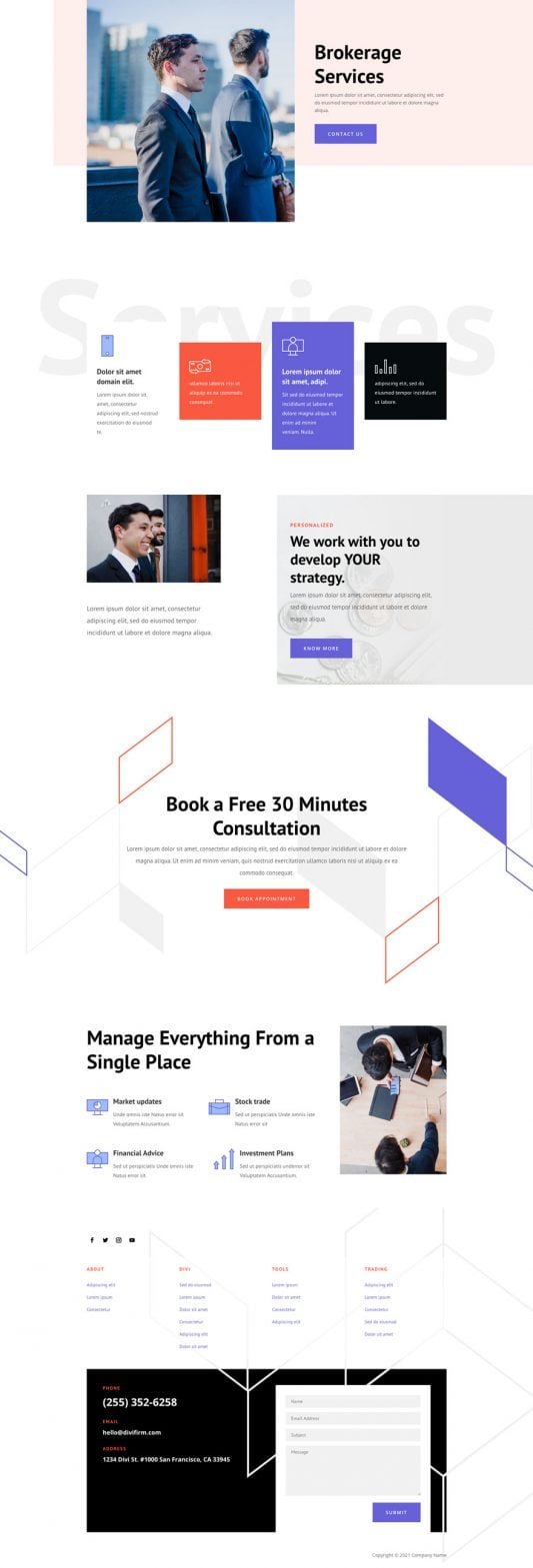
How to Calculate the Lifetime Customer Value (LTV) for a High-Volume Trader?
We’ll enrich your social media with insightful elegance on LinkedIn and Facebook: market trend threads, webinar whispers, and success story spotlights (anonymized, naturally) that foster trust and follows. It’s your edge to emerge as the reliable guide in circles from Hobart’s heritage holdings to Darwin’s development deals.
Seeking swift client conversions? Our Google Ads and Facebook Ads are market-matched, zeroing in on Aussie wealth seekers with astute, allocation-aware campaigns that amplify appointments and minimize misses—geared for brokerage booms in Sydney and Melbourne.
We’re your steadfast strategy squad for surge, all about results that let you master the markets. Up for a relaxed review over virtual ristretto? Visit our website—let’s broker your firm’s breakout success together!