

Table of Contents
In an era defined by rapid technological advancement, artificial intelligence (AI) has emerged as a transformative force reshaping industries, economies, and everyday life. From virtual assistants to autonomous vehicles, AI’s integration into society promises unprecedented efficiency and innovation. However, it also raises profound questions about ethics, employment, and human autonomy. This article explores the multifaceted impact of AI on modern society, examining its evolution, applications, challenges, and future trajectory. By understanding these dynamics, we can better navigate the opportunities and risks ahead.
The Evolution of Artificial Intelligence
The roots of AI trace back to the mid-20th century, when pioneers like Alan Turing pondered whether machines could think. Early developments, such as the 1956 Dartmouth Conference, coined the term “artificial intelligence” and set the stage for decades of research. Initially hampered by limited computational power, AI saw breakthroughs in the 2010s with machine learning and deep neural networks. Technologies like convolutional neural networks revolutionized image recognition, while transformers powered natural language processing models such as GPT series.
Today, AI’s evolution is accelerated by big data, cloud computing, and specialized hardware like GPUs. This progression has shifted AI from theoretical concepts to practical tools. For instance, reinforcement learning has enabled systems like AlphaGo to surpass human experts in complex games. As we transition from narrow AI—task-specific systems—to general AI aspiring toward human-like versatility, the pace of innovation continues to quicken, fundamentally altering societal structures.
Applications Across Industries
AI’s applications span virtually every sector, driving efficiency and innovation. In healthcare, machine learning algorithms analyze medical images with superhuman accuracy, aiding in early cancer detection. Predictive analytics forecasts disease outbreaks, as seen during the COVID-19 pandemic, optimizing resource allocation. Moving to finance, AI-powered robo-advisors democratize investment advice, while fraud detection systems process billions of transactions in real-time, preventing losses.
Manufacturing benefits from smart factories where AI optimizes supply chains and predictive maintenance minimizes downtime. In transportation, self-driving cars from companies like Waymo reduce accidents caused by human error. Retail leverages recommendation engines, boosting sales through personalized experiences on platforms like Amazon. Education sees adaptive learning platforms tailoring content to individual students, enhancing outcomes. These examples illustrate how AI not only streamlines operations but also creates new value propositions, fostering economic growth.
Societal Challenges and Ethical Dilemmas
Despite its benefits, AI introduces significant challenges. Job displacement is a primary concern; automation threatens roles in routine tasks, from assembly lines to customer service. Economists predict millions of jobs could be affected, necessitating reskilling programs and universal basic income discussions. Moreover, algorithmic bias perpetuates inequalities—facial recognition systems have shown higher error rates for certain demographics, raising fairness issues.
Privacy erosion is another hurdle, as AI thrives on vast datasets often collected without explicit consent. Cybersecurity risks amplify with AI-enhanced attacks, like deepfakes spreading misinformation. Ethically, the “black box” nature of some models obscures decision-making processes, complicating accountability. Regulatory frameworks, such as the EU’s AI Act, aim to classify and govern high-risk applications. Addressing these requires multidisciplinary collaboration between technologists, policymakers, and ethicists to ensure equitable deployment.
The Future Trajectory of AI in Society
Looking ahead, AI’s integration promises a symbiotic human-machine future. Augmented intelligence—AI enhancing human capabilities—will dominate, with tools like neural interfaces potentially revolutionizing cognition. Quantum computing could unlock exponential problem-solving speeds for climate modeling and drug discovery. Sustainable AI initiatives focus on energy-efficient models to mitigate environmental impacts from data centers.
Global competition, led by the U.S., China, and Europe, will shape AI governance. Open-source movements promote accessibility, while international standards prevent an arms race. By 2030, AI could contribute trillions to the global economy, per PwC estimates, but only if inclusivity prevails. Investments in AI literacy will empower citizens, bridging digital divides.
In conclusion, artificial intelligence stands at the crossroads of immense potential and profound responsibility. Its evolution from niche research to ubiquitous force has revolutionized industries and daily interactions, yet challenges like bias, job loss, and privacy demand vigilant oversight. As we forge ahead, proactive policies, ethical guidelines, and inclusive education will harness AI’s power for societal good. Ultimately, AI’s impact hinges on humanity’s stewardship—guiding it toward a future where technology amplifies our best qualities rather than supplanting them. By balancing innovation with caution, modern society can thrive in this AI-driven age.
Empower Your Auto Repair Shop with PKRank’s Tailored Digital Solutions
Hey there, wrench wizard! Keeping Aussie wheels turning in our vast, road-loving country is no small feat—from dusty outback drives to city commutes—but what if your shop could rev up clients without the extra grease?
At PKRank, we’re geared toward making digital marketing smooth, welcoming, and turbo-charged for auto repair pros like you, whether you’re fixing fleets in Sydney’s traffic jams, tuning classics in Melbourne’s car culture, or servicing SUVs in Brisbane’s suburban sprawl.
Visualize a robust, easy-to-use website revved up just for you, spotlighting your engine rebuilds, brake overhauls, or diagnostic wizardry with photo galleries, service booking forms, and quick-quote calculators. We’ll make it mobile-optimized, so drivers from Perth’s highway haulers to Adelaide’s vintage vehicle fans can book repairs on the fly, no matter where they are.
Auto Repair Shop Website Showcase
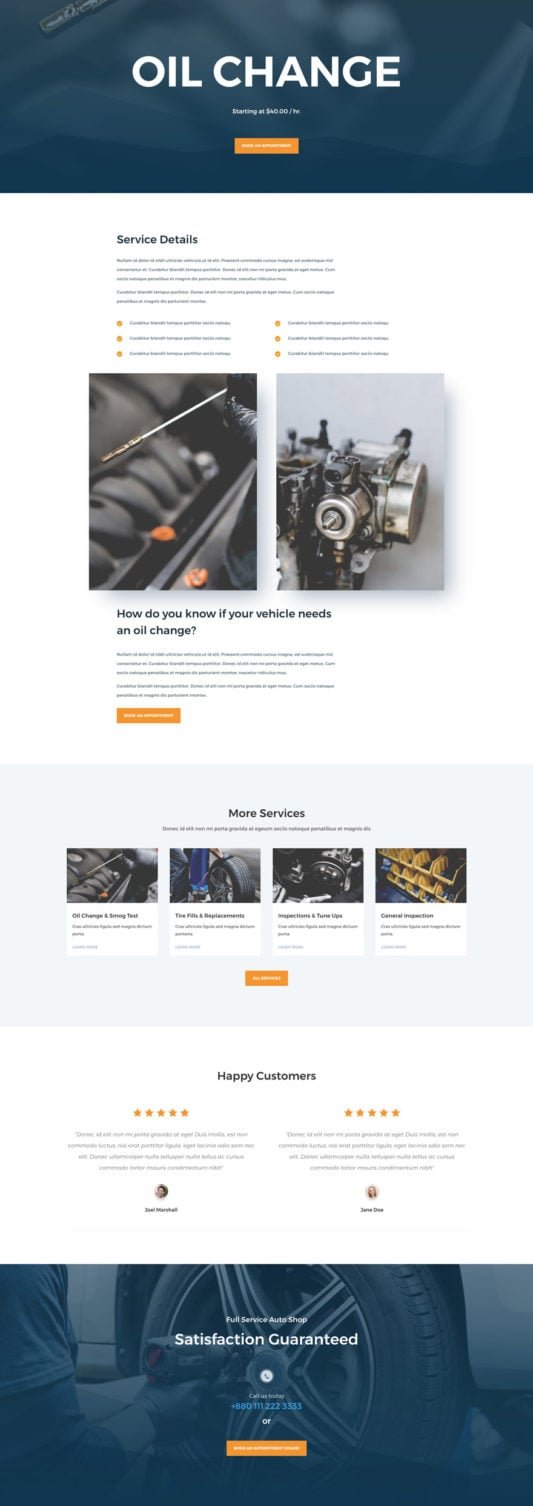
Can a Chatbot Effectively Handle “How Much Is an Oil Change” Questions?
Our SEO crew will pump up your Google rank, putting you front and center for searches like “auto mechanic Melbourne” or “tyre repair Perth.” Ditch the back-page blues and attract steady organic roll-ins from Canberra’s commuter crews or the Gold Coast’s beach buggy brigade!
We’ll steer your social media with a matesy vibe on Facebook and Instagram: fun before-and-after pics, quick DIY tips, and customer shoutouts that get likes and shares rolling. It’s your ticket to becoming the trusted pit stop in neighborhoods from Hobart’s hilly hauls to Darwin’s rugged rides.
For that instant tow-in boost? Our Google Ads and Facebook Ads are finely tuned, targeting breakdown-prone Aussies with smart, spend-savvy setups that crank up calls and curb the downtime—spot-on for busy repair hubs in Sydney and Melbourne.
We’re your reliable pit crew for growth, all about results that keep you under the hood doing what you do best. Up for a no-pressure chat over virtual espressos? Pop over to our website—let’s get your shop shifting into high gear together!