

Table of Contents
The Impact of Artificial Intelligence on Modern Healthcare
Artificial Intelligence (AI) has emerged as a transformative force in healthcare, revolutionizing how medical professionals diagnose diseases, treat patients, and manage health systems. From predictive analytics to robotic surgery, AI integrates advanced algorithms and machine learning to enhance efficiency and accuracy. This article explores the multifaceted impact of AI on healthcare, highlighting its applications, benefits, challenges, and future potential. By examining these aspects, we gain insight into how AI is reshaping the medical landscape for better patient outcomes.
Historical Evolution of AI in Healthcare
The journey of AI in healthcare began decades ago with rudimentary expert systems in the 1970s, such as MYCIN, designed to assist in diagnosing bacterial infections. These early systems laid the groundwork for more sophisticated technologies. The advent of big data in the 2000s, coupled with increased computational power, propelled AI forward. Notably, in 2011, IBM’s Watson won Jeopardy!, showcasing natural language processing capabilities that soon transitioned to medical applications like oncology. Today, deep learning models, powered by neural networks, analyze vast datasets from electronic health records (EHRs), imaging, and genomics. This evolution underscores AI’s progression from theoretical concepts to practical tools, bridging the gap between research and clinical practice.
Transitioning from history to current implementations, it is essential to understand how AI is actively deployed in various healthcare domains. These applications not only streamline workflows but also augment human expertise, paving the way for precision medicine.
Key Applications of AI in Healthcare
One of AI’s most prominent roles is in medical imaging. Algorithms like convolutional neural networks (CNNs) outperform radiologists in detecting conditions such as breast cancer from mammograms or pneumonia from chest X-rays. For instance, Google’s DeepMind achieved 94% accuracy in identifying diabetic retinopathy, surpassing human specialists in speed and consistency.
AI also excels in drug discovery. Traditional methods take years and billions of dollars; AI accelerates this by predicting molecular interactions. Companies like Insilico Medicine use generative adversarial networks (GANs) to design novel compounds, reducing timelines from years to months. Predictive analytics further aids in anticipating disease outbreaks and patient readmissions. During the COVID-19 pandemic, AI models forecasted infection hotspots, enabling proactive resource allocation.
In personalized medicine, AI tailors treatments by analyzing genetic data. IBM Watson for Genomics interprets genomic sequences to recommend therapies, while chatbots like Babylon Health provide triage and virtual consultations, easing the burden on healthcare systems. These diverse applications demonstrate AI’s versatility, seamlessly integrating into daily operations across hospitals and clinics.
Benefits and Advantages
The advantages of AI in healthcare are profound. Primarily, it enhances diagnostic accuracy and speed, reducing human error rates by up to 30% in some studies. Early detection through AI-powered wearables, such as those monitoring heart rhythms, prevents adverse events. Cost savings are another boon; the McKinsey Global Institute estimates AI could save the U.S. healthcare system $100 billion annually by optimizing operations and minimizing waste.
Moreover, AI democratizes access to quality care. In underserved regions, telemedicine platforms with AI diagnostics bridge geographical gaps. Scalability is key—AI processes millions of data points instantaneously, something unattainable manually. Patient engagement improves too, with AI-driven apps offering personalized wellness plans. As a result, healthcare providers focus more on complex cases, improving overall outcomes and job satisfaction.
However, while these benefits are compelling, they come with notable hurdles that must be addressed to fully harness AI’s potential. Examining these challenges ensures a balanced perspective.
Challenges and Ethical Considerations
Despite its promise, AI faces significant obstacles. Data privacy remains paramount; regulations like HIPAA and GDPR mandate stringent protections, yet breaches persist. Bias in algorithms, stemming from unrepresentative datasets, can exacerbate health disparities—for example, skin cancer detection models trained on lighter skin tones underperform on darker ones.
Integration issues abound, as legacy systems in hospitals resist AI adoption. Regulatory approval is rigorous; the FDA classifies many AI tools as medical devices requiring extensive validation. Workforce implications raise concerns, with fears of job displacement for radiologists or nurses, though evidence suggests augmentation rather than replacement. Ethical dilemmas, including accountability for AI errors—who is liable, the developer or clinician?—demand clear frameworks. Addressing these through interdisciplinary collaboration is crucial for sustainable growth.
The Future of AI in Healthcare
Looking ahead, AI’s trajectory points toward unprecedented innovations. Federated learning will enable model training across institutions without sharing sensitive data, enhancing privacy. AI-robotics hybrids promise autonomous surgeries, while quantum computing could simulate drug trials at atomic levels. Explainable AI (XAI) will make ‘black box’ decisions transparent, building trust. By 2030, projections indicate AI will handle 20-30% of routine tasks, freeing professionals for empathetic care.
Global initiatives, such as the WHO’s AI ethics guidelines, foster responsible deployment. As interoperability standards evolve, AI ecosystems will interconnect EHRs, wearables, and genomics seamlessly. This convergence heralds an era of proactive, preventive healthcare, shifting from reactive treatment to lifelong health optimization.
Conclusion
In summary, AI’s integration into healthcare marks a paradigm shift, offering unparalleled efficiency, precision, and accessibility. From imaging diagnostics to drug discovery, its applications are reshaping medicine, while benefits like cost reduction and early intervention promise improved global health. Yet, overcoming challenges such as bias, privacy, and ethics is imperative for equitable progress. As we navigate this transformative landscape, embracing AI thoughtfully will not only elevate patient care but also redefine the boundaries of human potential in healing. Stakeholders must collaborate to ensure AI serves as a force for good, ultimately leading to healthier societies worldwide.
Empower Your Bagel Shop with PKRank’s Tailored Digital Solutions
Hey there, dough dynamo! Whipping up chewy bagels and fresh schmears in Australia’s vibrant foodie scene is a delight, but luring in those hungry crowds? That’s the real rise-and-shine challenge.
At PKRank, we’re all about sprinkling digital marketing magic that’s fun, fuss-free, and flavor-packed for bagel bosses like you—whether you’re toasting classics in Sydney’s multicultural markets, innovating flavors in Melbourne’s cafe crawl, or slinging stacks in Brisbane’s brunch hotspots.
Picture a deliciously designed website baked fresh for your shop, with mouthwatering photo menus of everything bagels, lox-loaded beauties, or vegan twists, plus online ordering and loyalty perks. We’ll keep it crumb-free and mobile-munchable, so foodies from Perth’s fusion eateries to Adelaide’s artisan alleys can grab a bite virtually anytime.
Bagel Shop Website Demo
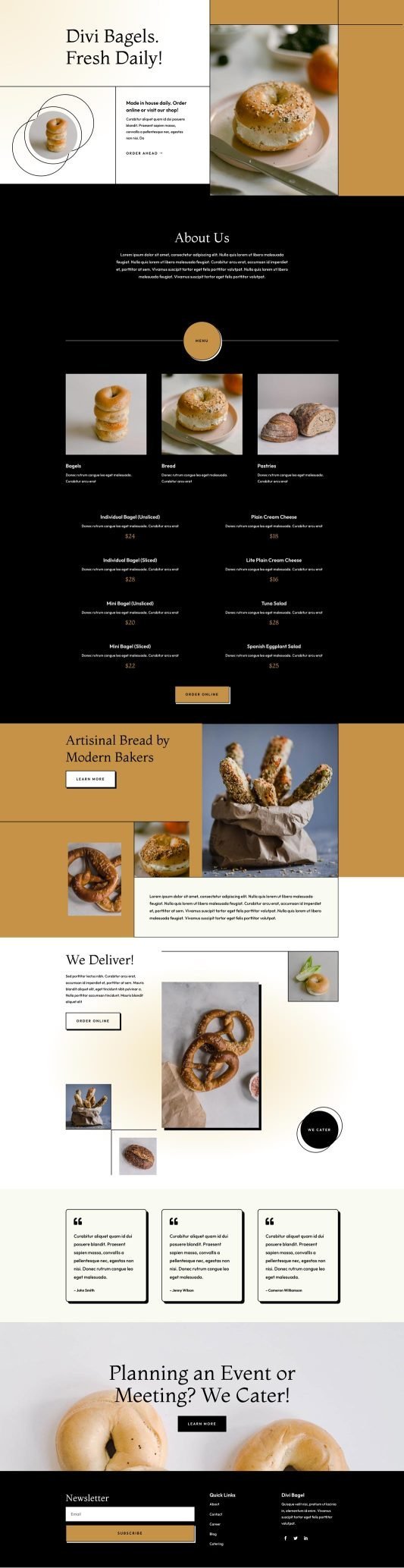
Can a Chatbot Effectively Handle Common Questions like “What Are Your Vegan Options?”
Our SEO bakers will knead your Google spot to the top, ensuring you’re the first crave for “best bagels Melbourne” or “bagel delivery Perth.” No more getting buried in the bread aisle—pull in organic foot traffic from Canberra’s coffee chasers or the Gold Coast’s surf-and-smear seekers!
We’ll glaze your social media with tasty vibes on Instagram and Facebook: steamy fresh-out-of-the-oven shots, pairing polls, and customer cream-cheese confessions that spread like wildfire. It’s your way to become the neighborhood nibble in areas from Hobart’s harbor hangs to Darwin’s tropical treats.
Craving quicker queues? Our Google Ads and Facebook Ads are precisely portioned, targeting Aussie appetite alerts with budget-bite setups that boost orders and nix the no-shows—tailor-made for bagel buzz in Sydney and Melbourne.
We’re your sweet sidekicks in sales, all about results that let you focus on the perfect boil. Up for a chat over virtual bagels? Swing by our website—let’s dough this and turn your shop into a breakfast blockbuster together!
Last Updated on March 21, 2026 by PKRank