

Table of Contents
The integration of artificial intelligence (AI) into healthcare represents one of the most transformative advancements in modern medicine. As healthcare systems worldwide grapple with rising demands, aging populations, and resource constraints, AI emerges as a powerful ally. From diagnostic tools that rival human experts to predictive analytics that prevent diseases, AI is reshaping patient care, operational efficiency, and medical research. This article explores the current applications, benefits, challenges, and future prospects of AI in healthcare, providing a comprehensive overview of its potential to revolutionize the field.
Current Applications of AI in Healthcare
AI is already making significant inroads across various healthcare domains. In diagnostics, machine learning algorithms analyze medical images such as X-rays, MRIs, and CT scans with remarkable accuracy. For instance, Google’s DeepMind has developed systems that detect eye diseases like diabetic retinopathy from retinal scans, often outperforming ophthalmologists. Similarly, IBM’s Watson Health assists oncologists by sifting through vast amounts of literature and patient data to recommend personalized cancer treatments.
Beyond imaging, AI powers predictive analytics in electronic health records (EHRs). Tools like Epic’s predictive models forecast patient deterioration, enabling early interventions in hospitals. In drug discovery, AI accelerates the process by simulating molecular interactions; companies like Insilico Medicine use generative adversarial networks to identify novel compounds, slashing development timelines from years to months. Natural language processing (NLP) further enhances applications by extracting insights from unstructured clinical notes, improving decision-making workflows.
These applications demonstrate AI’s versatility, transitioning from experimental phases to routine clinical use. As adoption grows, healthcare providers are witnessing tangible improvements in speed and precision, paving the way for broader integration.
Key Benefits of AI Implementation
The benefits of AI in healthcare are multifaceted, beginning with enhanced diagnostic accuracy and efficiency. AI systems reduce human error rates; a study published in The Lancet found that AI detected breast cancer in mammograms with a 5.7% lower false-positive rate than radiologists. This not only boosts confidence in diagnoses but also alleviates clinician burnout by automating repetitive tasks.
Cost savings represent another compelling advantage. By optimizing resource allocation, AI minimizes unnecessary tests and hospital readmissions. For example, predictive algorithms in the U.S. Veterans Health Administration have reduced sepsis-related mortality by 20% through timely alerts. Patient outcomes improve as well, with personalized medicine tailoring treatments to genetic profiles via AI-driven genomics analysis.
Moreover, AI democratizes healthcare access. Telemedicine platforms enhanced by AI chatbots provide preliminary consultations in underserved areas, bridging gaps in primary care. Scalability is key; during the COVID-19 pandemic, AI models like BlueDot predicted outbreaks days before official announcements, aiding global response efforts. These benefits collectively position AI as a catalyst for sustainable, equitable healthcare systems.
Transitioning from advantages, it is essential to address the hurdles that temper enthusiasm for widespread AI adoption.
Challenges and Ethical Considerations
Despite its promise, AI in healthcare faces substantial challenges. Data privacy and security top the list, as AI relies on vast datasets that risk breaches under regulations like HIPAA and GDPR. Bias in training data poses another threat; algorithms trained predominantly on certain demographics may underperform for minorities, exacerbating health disparities. A notable case involved an AI tool that favored white patients over Black patients in kidney function predictions.
Regulatory hurdles slow progress. The FDA has approved over 500 AI medical devices, but ensuring long-term safety and efficacy remains complex. Interoperability issues between disparate EHR systems hinder seamless AI deployment. Additionally, clinician trust is fragile; surveys indicate many physicians hesitate to rely on “black box” models whose decision-making processes lack transparency.
Addressing these requires robust governance. Initiatives like the EU’s AI Act propose risk-based frameworks, while explainable AI (XAI) techniques aim to demystify algorithms. Ethical guidelines from organizations such as the World Health Organization emphasize fairness, accountability, and inclusivity. Overcoming these challenges will be pivotal for AI’s responsible evolution.
Future Prospects and Innovations
Looking ahead, AI’s role in healthcare will expand dramatically. Advancements in federated learning allow models to train across institutions without sharing sensitive data, enhancing privacy. Robotics integrated with AI, such as da Vinci surgical systems, promise precision in minimally invasive procedures. Wearables with AI will enable continuous health monitoring, predicting conditions like heart failure via smartphone sensors.
Generative AI could revolutionize research, simulating clinical trials virtually to expedite approvals. By 2030, projections suggest AI could save the U.S. healthcare system $360 billion annually, according to McKinsey. Global collaborations, like the WHO’s AI for Health initiative, underscore a unified push toward innovation.
These developments signal a future where AI augments human expertise, fostering proactive, patient-centered care.
In conclusion, artificial intelligence is not merely a technological trend but a cornerstone of healthcare’s future. Its current applications yield immediate benefits in diagnostics and efficiency, while ongoing efforts to mitigate challenges ensure ethical deployment. As innovations unfold, AI holds the potential to extend lifespans, reduce costs, and equalize access. Stakeholders must prioritize collaboration and regulation to harness this power fully, ushering in an era of unprecedented medical progress.
Empower Your Beauty Salon with PKRank’s Tailored Digital Solutions
Hey there, glam guru! Transforming everyday looks into head-turning masterpieces in Australia’s sun-kissed salons is your superpower, but drawing in those eager clients? Let’s make it effortless and fabulous.
At PKRank, we’re dedicated to infusing digital marketing with sparkle, simplicity, and serious shine for beauty pros like you—whether you’re styling tresses in Sydney’s stylish suburbs, pampering clients in Melbourne’s trendy lanes, or glowing up in Brisbane’s balmy beauty spots.
Envision a radiant, user-friendly website styled exclusively for your salon, flaunting galleries of flawless haircuts, nail art wonders, or spa serenity with seamless online booking and virtual consult tools. We’ll ensure it’s glow-getter mobile-ready, so beauty seekers from Perth’s polished parlors to Adelaide’s elegant escapes can schedule their glow-up anytime, anywhere.
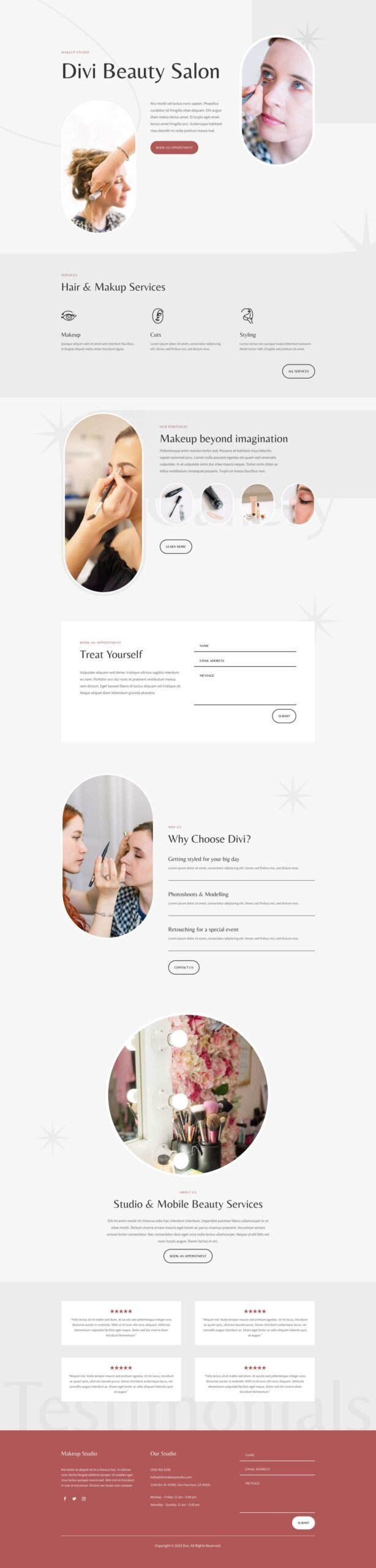
Beauty Salon Website Template
Can a Chatbot Effectively Handle Common Questions like “What Is Your Cancellation Policy?”
Our SEO sparkle squad will elevate your Google glow, securing prime positions for searches like “best hair salon Melbourne” or “nail technician Perth.” Wave goodbye to fading into the filter fog and hello to organic bookings from Canberra’s chic circles or the Gold Coast’s beachy babes!
We’ll beautify your social media with a flirty flair on Instagram and Facebook: stunning before-and-afters, trend-tip reels, and client glow-ups that rack up hearts and hashtags. It’s your spotlight to strut as the ultimate beauty beacon in vibes from Hobart’s heritage haunts to Darwin’s daring divas.
For that instant appointment rush? Our Google Ads and Facebook Ads are precision-preened, honing in on Aussie style stars with savvy, sparkle-smart campaigns that amp up walk-ins and trim the wait—crafted for bustling beauty blocks in Sydney and Melbourne.
We’re your bubbly beauty boosters, all about results that let you unleash the magic of makeovers. Ready for a fun facetime chat over virtual mimosas? Head to our website—let’s polish your salon into a client sensation together!